
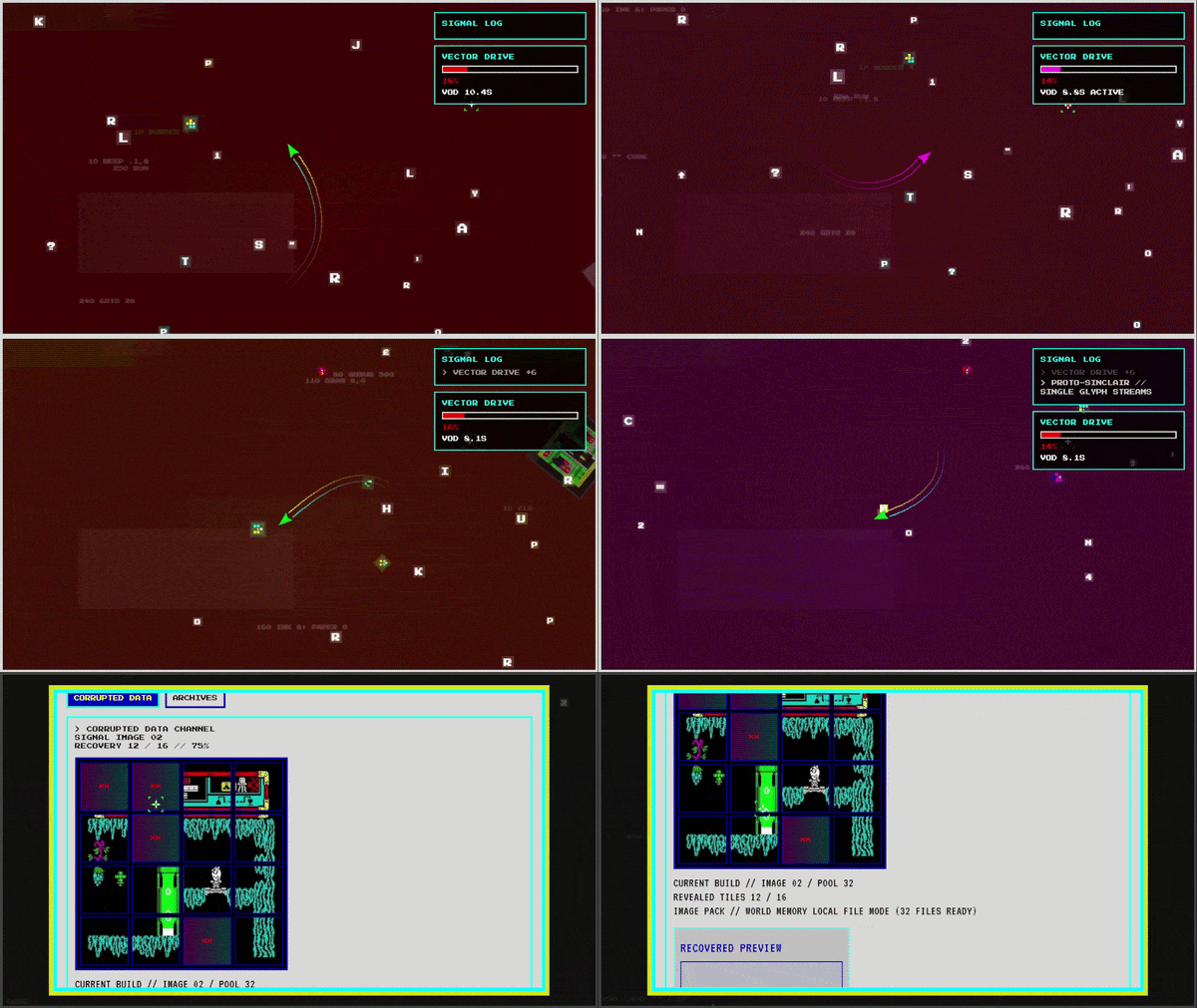
ZX Verse: Archive Signal — Building a Haunted ZX Spectrum Memory
Some games begin with mechanics.
Some begin with a visual style.
ZX Verse: Archive Signal began with a feeling.
Not just nostalgia — something stranger than that.
I wanted to make a game that felt like stepping inside the memory of an old machine. Not simply a retro-inspired shooter with chunky pixels and scanlines, but a world that felt assembled from half-remembered loading screens, broken code, cassette hiss, playground myths, magazine culture, and the strange emotional residue of the ZX Spectrum era.
That became ZX Verse: Archive Signal.
A retro arcade shooter set inside a haunted ZX Spectrum memory archive.
You pilot a tiny vector ship through drifting data-space, destroy corrupt blocks, collect signal fragments, restore lost images, and survive a world built from fragments of 8-bit history. On the surface, it’s a fast arcade game. Underneath, it’s something else entirely: part digital archaeology, part retro myth, part interactive memory field.
Not Just Retro. Haunted Retro.
There are a lot of games inspired by the 8-bit era, and that’s no bad thing. But I didn’t want to make something that just looked old.
I didn’t want to stop at pixel art and a CRT filter.
The real thing I wanted to capture was the texture of that era — the way those machines felt bigger than they really were. The way a tiny loading screen could suggest an entire world. The way games, magazines, coders, hardware, and playground rumours all blurred together into one giant cultural memory.
That’s what ZX Verse is really trying to channel.
It’s not just “a game inspired by the Spectrum.”
It’s a game about the mythology of the Spectrum.
That’s why the world is built like an archive.
That’s why you’re not just shooting enemies — you’re navigating broken memory space.
That’s why fragments matter.
That’s why restoration matters.
That’s why it feels a little bit like an arcade game and a little bit like wandering through the inside of a machine dream.
The Core Idea: A Playable 8-Bit Memory Field
At its heart, ZX Verse: Archive Signal is built around a simple arcade loop:
- Move fast
- Shoot corrupt blocks
- Avoid hostile data
- Collect signal fragments
- Recover archive pieces
- Survive as long as possible
That simplicity matters.
I wanted it to feel immediate — something you can understand quickly, like the best old arcade games. You should be able to pick it up and feel what it wants from you in seconds.
But I also wanted the world around that loop to feel layered.
The deeper you go, the more ZX Verse becomes about discovery.
You aren’t just chasing score. You’re rebuilding an archive.
You’re recovering lost images.
You’re brushing against fragments of old hardware culture, game history, broken machine language, and weird symbolic residue from a version of the 1980s that may or may not have existed exactly as remembered.
That’s the balancing act I love about it:
simple controls, weird atmosphere, and hidden depth.
Why the ZX Spectrum Still Has Power
The ZX Spectrum still has a hold on me because it was never just about what it could do technically.
It was about what it suggested.
It was a machine of limitations, but those limitations became part of its personality. Bright colours. Harsh contrasts. Brutal simplicity. Weird beauty. Attribute clash. Beeper noise. Tape loading rituals. Games that felt enormous because your imagination did half the rendering.
That’s a powerful thing.
Modern hardware can do almost anything, but sometimes that makes games feel too literal. Too complete. Too polished.
The Spectrum always left gaps.
And those gaps were magic.
ZX Verse is built around that idea.
It doesn’t just celebrate the machine’s look — it celebrates the way the machine made players imagine more than they could see.
Making Something That Feels Personal
A big part of why ZX Verse matters to me is that it doesn’t feel like a generic retro project.
It feels personal.
It’s built from the kind of things I’ve carried around for years:
- the atmosphere of old home computers
- the strange reverence of retro magazines
- the weird mythology around coders and studios
- the memory of loading screens and static
- the feeling of games that seemed to contain more than they visibly did
- the sense that old machines had hidden lives inside them
That’s why ZX Verse became more than “make a shooter.”
It became:
- an archive
- a memory space
- a love letter
- a haunted machine
- a weird digital museum you can fight your way through
That combination is what gives it identity.
Working with AI as a Creative Tool
I’ve talked before about building games with the help of AI — specifically my digital co-conspirator, Crocodile.
But with ZX Verse, the important thing isn’t “AI made a game.”
That’s not the story.
The real story is that AI helped me keep momentum while I built something that was already living in my head.
The ideas, tone, references, obsession, and weirdness all came from me. Crocodile helped me shape systems, solve problems, refine structure, test ideas, and keep pushing forward when I might otherwise have drifted off into another unfinished project.
That’s the bit that matters.
Not replacement.
Not automation.
Collaboration.
If anything, ZX Verse feels more human to me because it let me finally drag an old idea into reality instead of leaving it to rot in the imagination pile.
Launching ZX Verse
Getting ZX Verse: Archive Signal live has been one of those surreal moments where something that existed as scattered ideas, notes, experiments, visual moods, and “what if…” conversations suddenly becomes a real thing other people can actually play.
That’s always strange.
But it’s also exciting.
Because once a game is out in the world, it stops being just yours.
People bring their own memories to it.
Their own references.
Their own reading of what the atmosphere means.
That feels especially right for a game like this.
A game built from memory should probably create new memories too.
What Comes Next
This version is just the beginning.
There’s still more archive space to explore. More strange fragments to recover. More retro myths to drag into the light. More ways to deepen the sense that you’re travelling through the inside of a haunted machine that remembers more than it should.
That’s what excites me most about ZX Verse.
It doesn’t feel finished in the “done and over” sense.
It feels alive.
Like a signal that can keep mutating.
Like an archive that can keep opening.
And honestly, that feels exactly right.
Play ZX Verse: Archive Signal
If any of this sounds like your kind of weird, you can play it now on itch.io.
Destroy corrupt blocks.
Collect signal fragments.
Restore lost images.
Survive the verse.
Check out WOMBATSOFT 84 first game, SLE.
ZX Verse is an ongoing project exploring corrupted memory, retro systems, and lost signals. More entries will expand the archive.